
What is considered a maintenance emergency?
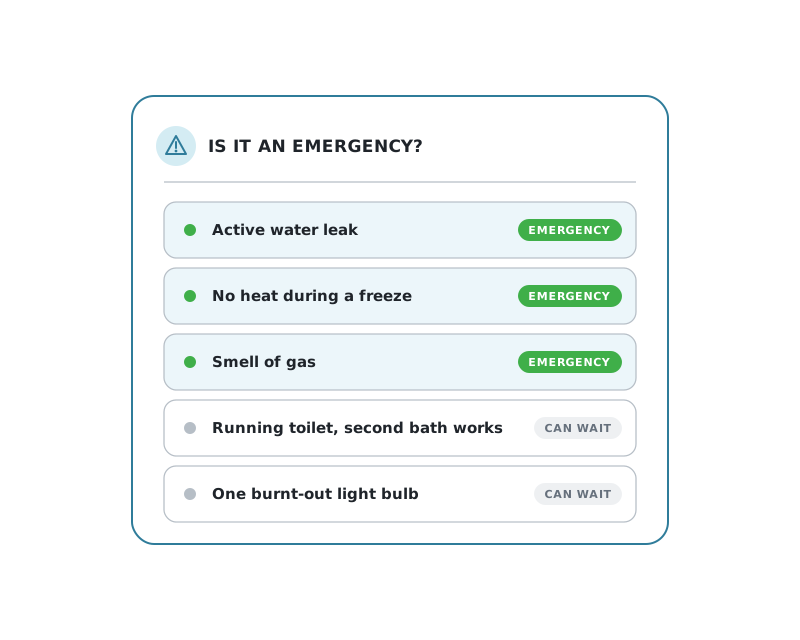
A maintenance emergency is a problem that threatens someone’s safety or causes damage that gets worse every minute it waits, such as an active leak, a gas smell, or no heat in freezing weather. The single fastest way to reduce late-night dispatches, and the frustration that comes with them, is to decide, in advance, what your community treats as an emergency. This guide gives you a practical starting rubric and the gray areas to settle for yourself.
“It’s an emergency” means something different to a resident at midnight than it does to your maintenance budget. When no one has defined the line, residents define it for you, and either everything becomes a 2 a.m. dispatch or nothing does. A written, shared definition fixes that.
A clear definition protects both sides of the call.
Protects residents & assets
Genuine emergencies (water, gas, no heat in a freeze) get the fast response that prevents injury and damage.
Cuts non-emergency dispatch
A defined line keeps your on-call technician in bed for the running toilet that can safely wait until 8 a.m.
Sets resident expectations
When residents know what qualifies, they’re less frustrated by a “we’ll handle it in the morning” answer.
Reduces liability
A consistent, documented standard is far easier to defend than a judgment call made differently every night.
Usually an emergency.
These threaten safety or cause escalating damage every minute they wait. Most communities dispatch on all of them.
- Active water leak or flooding
- Sewage backup into the unit
- No heat during freezing weather
- No cooling during dangerous heat
- Smell of gas
- Sparking outlets or an electrical burning smell
- Fire or a triggered carbon-monoxide alarm
- A door or window that will not lock / lock-out with a safety concern
- Total loss of power to the unit
Callers in immediate danger should always be told to hang up and dial 911 first.
Usually not an emergency.
Real problems worth a work order, but not worth waking a technician. Log them and handle them the next business day.
- Running toilet when a second bathroom works
- Dripping faucet with no active damage
- A single appliance out (dishwasher, microwave)
- One burnt-out light bulb or fixture
- Minor, non-active pest sightings
- Loose cabinet, blind, or door hardware
- Hot water that is slow but present
- Noise complaints (route to courtesy patrol, not maintenance)
The gray areas are yours to decide.
The lists above are a starting point. The character of your community, its climate, its residents, its staffing, decides where a few cases land.
Lockouts. Some communities treat an after-hours lockout as an emergency; others charge a fee and route it to courtesy patrol or a locksmith. Decide, then say so clearly.
AC in mild weather. A broken AC unit is an emergency in a July heat wave and a next-morning ticket in October. Set a temperature threshold rather than a blanket rule.
One working bathroom. A single-bath unit with a failed toilet is a very different call than a two-bath unit with one out. Let unit context drive the answer.
Write your decisions down. A definition that lives only in one manager’s head disappears the moment they’re on vacation.
A definition only helps if your phone enforces it.
Writing the rules down is step one. Getting them applied consistently at 2 a.m., call after call, is where an answering system earns its keep.
With Answer Automate (IVR), your rules become the menu: emergency selections route straight to dispatch, everything else is captured for the morning. With Answer Intelligence (conversational AI), the agent listens to what the resident describes and decides whether it qualifies against your community’s definition, so the running toilet gets logged and the burst line gets dispatched, without the resident needing to self-diagnose.
Either way, the standard is applied the same way every night, and every call is documented, with the resident’s message or AI conversation recorded. New to the IVR-versus-AI question? Start with our IVR vs conversational AI guide, or see the after-hours maintenance calls guide for the full workflow. For how it all comes together as a service, see our after-hours answering service page.