
What an apartment answering service actually costs.
Pricing for after-hours answering is harder to compare than it looks. Two quotes can use the same words and bill in completely different ways, and only one of them is a number you can actually budget. Here’s how the models work, what moves your invoice, and what to ask before you sign.
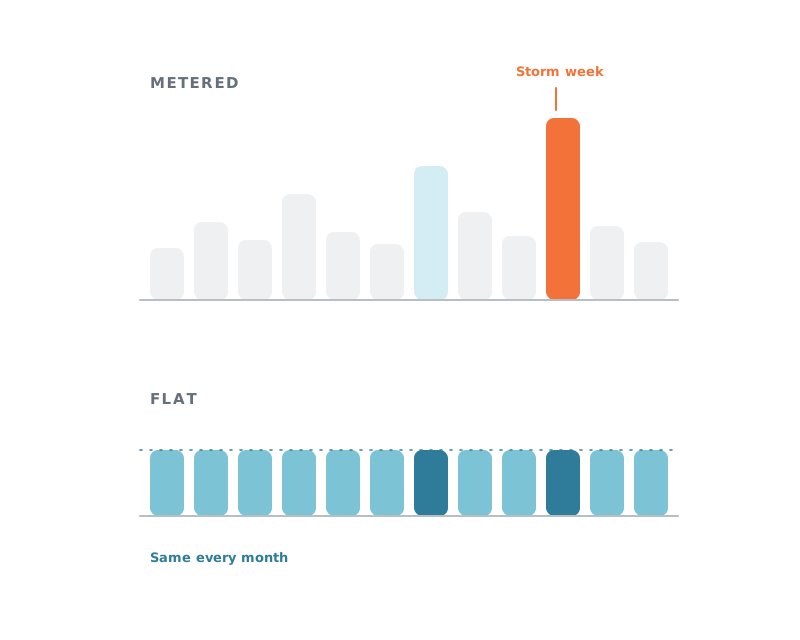
The useful question isn’t “which service is cheapest.” It’s “which of these quotes is a price, and which is a starting point?” A metered quote tells you what a quiet month costs. It doesn’t tell you what February costs when a pipe freezes and your phones don’t stop. That’s the month you actually need to have budgeted for.
Four ways answering services charge.
Almost every quote you receive will be one of these. The differences matter more than the rates.
Per minute
You’re billed for agent talk time, commonly quoted somewhere around a dollar a minute. Simple to explain, impossible to forecast. Your bill is a function of how much your residents talk.
Per call
A flat charge for every answered call regardless of length. More predictable than per-minute, but you still pay more in exactly the months your community has the most going on.
Bundled minutes plus overage
The most common structure: a monthly fee that includes a pool of minutes, then an overage rate for everything past it. The headline number is the floor, not the price.
Flat per community
One recurring figure per community, set by the size of the property rather than by call activity. The invoice is the same in a quiet month and a brutal one.
The first three are metered: they price the conversation. The fourth prices the community. That single distinction explains most of the difference between two quotes that look similar on paper.
Nobody can predict how many minutes they’ll use.
A bundle of included minutes asks you to forecast something that isn’t forecastable, then bills you for guessing low.
Ask a property manager how many after-hours minutes their community will consume next month and you’ll get an honest shrug. It depends on the weather, the age of the boiler, whether a water heater fails, how many residents call about the same outage, and how long each of them needs to explain the problem. None of that is knowable in advance, and none of it is within your control.
So a metered plan puts you in an odd position: you’re asked to commit to a bucket size before you have any way to know whether it fits. Guess high and you pay for minutes you never use. Guess low and you pay overage, at a rate that is almost always worse than the bundled rate you were quoted.
And the overage arrives on the worst possible schedule. A hard freeze, a storm, a building-wide outage: the nights when your residents most need someone to pick up are precisely the nights the meter runs hardest. The month you get the biggest invoice is the month you were already dealing with the most. Metered pricing charges you most for the service working exactly as intended.
There’s a quieter version of the same problem: when a vendor is paid by the minute, every extra minute on a call is revenue to them. Your interest in a fast, efficient intake and theirs don’t point the same direction.
The charges that don’t make it into the quote.
The rate you’re quoted is rarely the whole invoice. These are the additions worth asking about by name.
None of these are unusual or dishonest. They’re standard in the live answering industry. They’re just easy to miss when you’re comparing two headline rates side by side, and they tend to land on the busiest months.
The patch fee deserves particular attention in multifamily. If your service charges each time it phones your on-call technician, then you are paying, per event, for the one thing you actually hired it to do.
-
Setup and onboarding: a one-time fee to build your account and scripting.
-
Patch or transfer fees: charged each time they reach your technician.
-
Holiday and overnight premiums: higher rates on the hours you bought the service for.
-
Monthly minimums: a floor you pay even in a quiet month.
-
Integration or technology fees: to connect anything to your PMS.
Is your price driven by your community, or by how much your residents talk?
This is the question that sorts the quotes. One input you know on day one; the other you find out after the invoice arrives.
| Pricing model | What moves your bill | Can you forecast it? |
|---|---|---|
| Per minute | Total talk time: call volume × call length | No. Neither input is under your control. |
| Per call | Number of answered calls | Partly, until a storm or an outage. |
| Bundled plus overage | Everything past the included pool, at the overage rate | No. It requires forecasting the bundle correctly. |
| Flat per community | Unit count (beds for student housing) | Yes. It’s known before you sign and doesn’t move. |
Unit count is a fact you already know. Talk time is a variable you discover in arrears. If you’re building a budget a regional manager has to defend, only one of those is usable.
Ten questions that make any quote comparable.
Ask every provider the same list, including us. The answers turn two incomparable quotes into a real comparison.
- What exactly is included: minutes, calls, or communities?
- What is the overage rate once the included amount runs out?
- What counts as a billable minute? Does hold time bill? Does the greeting?
- Are transfers or patches to my technician billed separately?
- Are holidays and overnight hours billed at a premium?
- What happens to my bill during a storm week or a freeze event?
- Is there a monthly minimum, and does it apply per community or per account?
- What are the setup, onboarding, and integration fees?
- What is the contract term, and what does it cost to add or remove a community?
- If my call volume doubles next month, what does my invoice look like?
For the operational side of the same comparison, see live vs. automated answering and the answering service comparison.
Flat, per community, and not metered.
One recurring figure per community, anchored to the size of the property rather than the length of the conversation.
Activ prices each community on its unit count, or bed count for student housing, where beds are how the property is actually measured. There is no per-minute billing, no bucket of included minutes, and no overage. A quiet February and a February with a burst pipe cost the same, which means the number you approve is the number you pay.
Management companies that standardize on Activ across their portfolio can ask about portfolio pricing. If you’re evaluating on behalf of more than a handful of communities, mention that up front. It changes the conversation.
Most operators find it costs less than they expected, and materially less than a metered live service once the overage and patch fees are counted. But we’d rather show you your number than ask you to trust an adjective.
Why we don’t publish a price on this page
Because it would be wrong for almost everyone reading it. Pricing follows unit or bed count and whether you’re bringing one community or a portfolio, so a single published figure would overstate the cost for some operators and understate it for others. We’d rather spend two minutes getting you an accurate number than post one that misleads you. There’s no long-term contract, and adding or removing a community is straightforward.
Common questions.
- How much does an apartment answering service cost?
- It depends far more on the pricing model than on the provider. Live answering services are usually metered, pairing a bundle of included minutes with an overage rate, so the real answer is a range, not a number, and the range widens with your call volume. Flat per-community pricing produces a single predictable figure instead. Before comparing two quotes, confirm you’re comparing the same model.
- Why do answering services charge by the minute?
- Because a live service’s main cost is agent time, so billing by the minute matches how they incur cost. The side effect is that your bill tracks how long your residents talk, something no property manager can forecast, and it rises fastest on the busiest nights.
- What hidden fees should I ask about?
- The common ones are setup or onboarding fees, per-transfer or patch charges when the service phones your technician, holiday and overnight premiums, monthly minimums, and integration or technology fees. None of these usually appear in the headline rate, and together they can move a quote substantially.
- Does Activ Answer charge per minute?
- No. Activ is priced flat per community, based on unit count (bed count for student housing), with no per-minute billing and no overage. A busy night, a long call, or a storm week doesn’t change your invoice.
- Why isn’t Activ’s pricing published on this page?
- Because a published table would misrepresent most communities. Pricing depends on unit or bed count and on whether you’re bringing one community or a portfolio, so a single number would be wrong for nearly everyone who read it. A quote takes very little time and gives you a figure that’s actually yours.